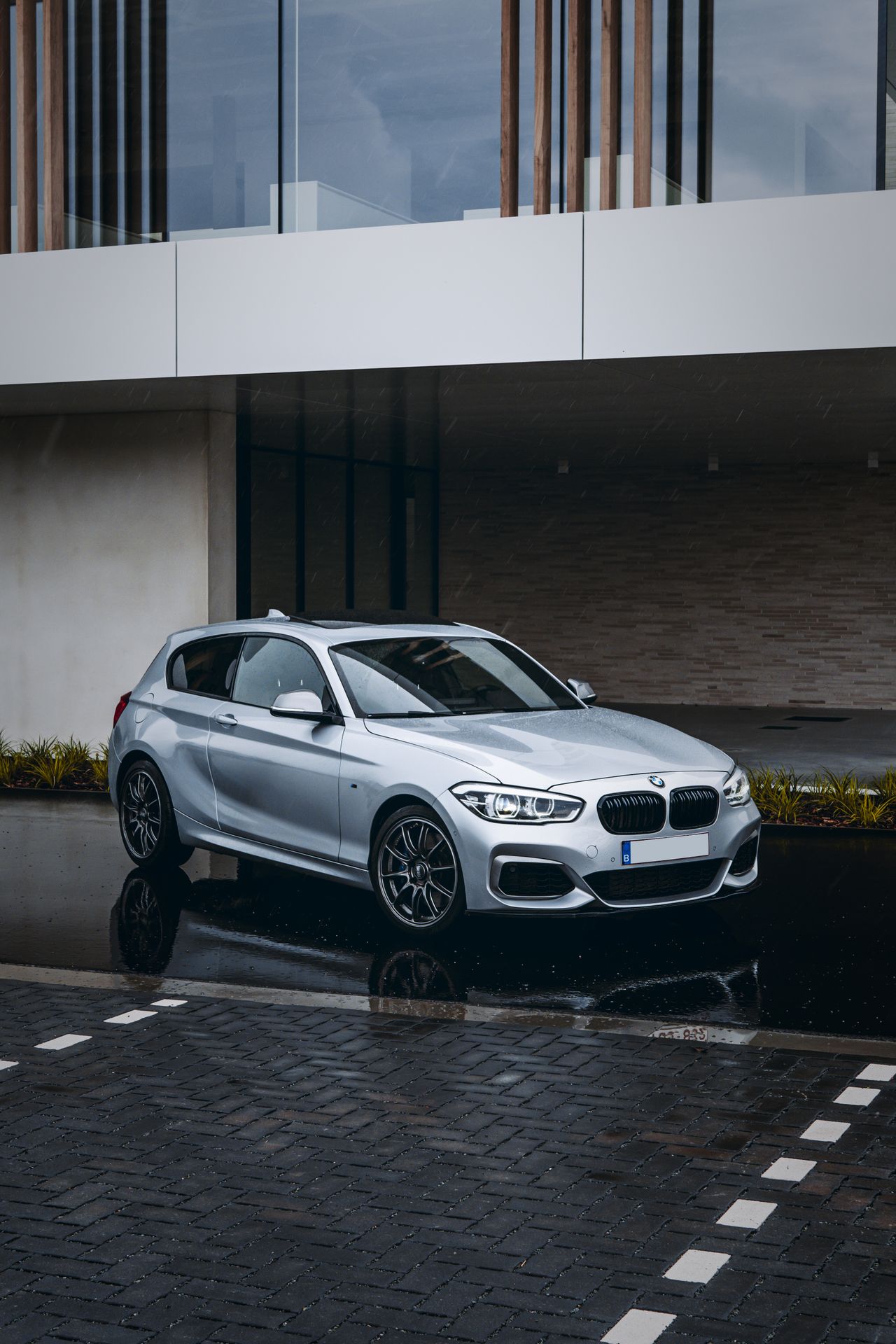
The BMW 1 Series is unlike every other small hatchback. While the Volkswagen Polo, Ford Fiesta, and Vauxhall Corsa all drive their front wheels, the F20-generation 1 Series (2011–2019) is rear-wheel drive — the same configuration as a 3 Series, M3, or 5 Series. For buyers who care about how a car drives, not just what it does, this makes the 1 Series genuinely different from its class rivals.
Which Generation to Buy
F20 (2011–2019): The rear-wheel-drive generation. This is the one enthusiasts seek out, and for good reason: balanced handling, a beautifully weighted steering rack, and proper driving dynamics on the island's twisting coastal roads. Available from under £6,000 for honest early examples with sensible mileage.
F40 (2019–present): BMW switched to a front-wheel-drive platform shared with the MINI. More spacious and technically more efficient, but the defining character of the 1 Series — the rear-wheel-drive balance — is gone. Strong choice if you want BMW interior quality and features without the driver-focus of the F20.
The decision depends on your priorities: if driving matters, buy the F20. If you mainly want a premium-feeling everyday car, the F40 is more practical.
Which Engine? (F20 Focus)
118i (B38, 1.5 turbo, 136bhp, 2015+): The engine to target in the F20. BMW's B38 three-cylinder unit is smooth, efficient, and far more reliable than the older N13 1.6 it replaced. Economy of 40–45mpg, adequate performance, and no significant known issues. Available from 2015 in post-facelift F20 models.
118i (N13, 1.6 turbo, 136bhp, 2011–2015): The pre-facelift engine. The N13 has a reputation for timing chain issues, turbo problems, and high oil consumption on higher-mileage cars. Worth buying only at a significant discount with full service history showing the chain has been inspected.
120i (B48, 2.0 turbo, 184bhp, 2015+): Step up in performance without much extra cost used. Smooth four-cylinder, capable of 45mpg, and strong enough to make the rear-wheel-drive chassis come alive on faster roads. One of the better all-round choices in the F20 range.
116i (N13 or B38, 109bhp): Entry-level engine. The B38-engined 116i is fine; the N13 116i is the most problematic — chain issues are amplified by the fact that economy-focused owners may have stretched service intervals. Best avoided.
118d (N47 diesel, 143bhp): The diesel sweet spot for mileage-conscious buyers. The N47 engine has a known timing chain issue on very high-mileage cars (beyond 150,000 miles typically), but is otherwise reliable. Only worth it if you do mainland runs regularly — short IoW trips are not ideal for diesel.
120d (N47/B47, 190bhp): More performance from the diesel. The newer B47 unit (post-2015) is better again. Strong choice for buyers who do mixed driving including mainland runs.
F20 vs F40: The Key Differences
| F20 (2011–2019) | F40 (2019–present) | |
|---|---|---|
| Drive layout | Rear-wheel drive | Front-wheel drive |
| Platform | CLAR (BMW proprietary) | UKL2 (shared with MINI) |
| Interior | Good, showing age | Modern, premium |
| Rear space | Cramped | Better |
| Driver appeal | High | Lower |
| Running costs | Similar | Similar |
| Price used | From ~£5,000 | From ~£15,000 |
Known Issues to Check
N13 engine timing chain (F20 pre-2015): The primary concern on early cars. Cold-start chain rattle is the warning sign. Always check oil change history — extended intervals on the N13 accelerate wear.
N47 diesel timing chain: The N47 diesel can suffer chain issues on very high-mileage examples. Listen carefully on cold start and ask about any chain-related work.
Turbo wastegate rattle (N13): A common complaint on N13-engined cars — a rattling noise from the turbo at light throttle. Can be expensive to fix.
Electric power steering: Some early F20 models had EPAS issues — check that steering assistance is consistent through the full lock.
Rust: BMW's galvanising is generally good, but island salt air still warrants checking sill bottoms, rear wheel arches, and the front subframe mounting points.
IoW Buying Tips
BMW 1 Series supply on the island is lower than mainstream hatchbacks — typically a handful of examples available at any time across price points. The F20 in particular needs careful buying: the N13 engine cars are worth checking thoroughly before purchase, while B38 and B47-engined examples are significantly more straightforward.
Budget for higher running costs than a Fiesta or Corsa: parts cost more, and main dealer servicing is expensive (though independent BMW specialists offer far better value). Insurance groups are 18–30 depending on engine and trim — noticeably higher than mass-market rivals.
Check MOT history at gov.uk/check-mot-history and always run an HPI check. A pre-purchase inspection from a BMW specialist is strongly recommended for any N13-engined example.
Budget Guide
| Budget | What to Expect |
|---|---|
| Under £6,000 | F20 pre-facelift (2011–2015), N13 engine, 70,000–120,000 miles |
| £6,000–£10,000 | F20 post-facelift (2015–2019), B38 or N47, 40,000–80,000 miles |
| £10,000–£16,000 | F20 late or early F40, 2017–2020 |
| £16,000+ | F40 M Sport or M135i xDrive |
Frequently Asked Questions
Is the BMW 1 Series reliable?
It depends on which engine. The pre-2015 N13 1.6 petrol has known issues with timing chains, turbos, and oil consumption — these cars need careful checking and regular servicing. The B38 1.5 (from 2015) and B48 2.0 (from 2015) are substantially more reliable and are the engines to target. The N47 diesel is broadly reliable to high mileages but benefits from chain checks above 150,000 miles.
Why is the BMW 1 Series rear-wheel drive?
The F20 generation (2011–2019) was engineered around BMW's CLAR platform, which prioritised the 50:50 weight distribution that defines BMW's driving character. No other car in the small hatchback class offers rear-wheel drive. BMW switched to a front-wheel-drive platform for the F40 (2019+) to improve interior space and reduce costs.
What is the best BMW 1 Series to buy on the Isle of Wight?
The F20 118i with the B38 engine (2015–2019) is the sweet spot — reliable engine, rear-wheel-drive dynamics, and available from around £7,000 in Sport or SE trim. If driving pleasure is the priority, a 120i Sport with the B48 engine offers more performance without a huge cost premium. The M Sport bodystyling adds appeal but also higher insurance premiums.
How much does it cost to run a BMW 1 Series on the IoW?
Running costs are higher than mainstream rivals. Servicing at a BMW specialist (not main dealer) brings costs to a reasonable level — expect £200–£350 for a full service. Parts cost more than Ford or Vauxhall equivalents. Insurance is noticeably higher: a typical 30-year-old driver might pay 20–40% more for a 1 Series than a comparably-priced Fiesta. Fuel economy from the B38 118i is 38–45mpg in mixed island driving.
Is the BMW 1 Series good for Isle of Wight roads?
The F20 is excellent on the island's varied roads. The rear-wheel-drive balance makes it entertaining on the coastal A3055 and the winding B-roads inland, while the ride quality is firm but manageable. The compact size (4.32m for the F20) is well-suited to Newport's town centre and the island's narrower lanes. The F40 is more comfortable in a traditional sense but less characterful.
Browse BMW 1 Series for sale on the Isle of Wight →
Related: BMW guide (all models) · Mercedes A-Class guide · Salt air corrosion guide