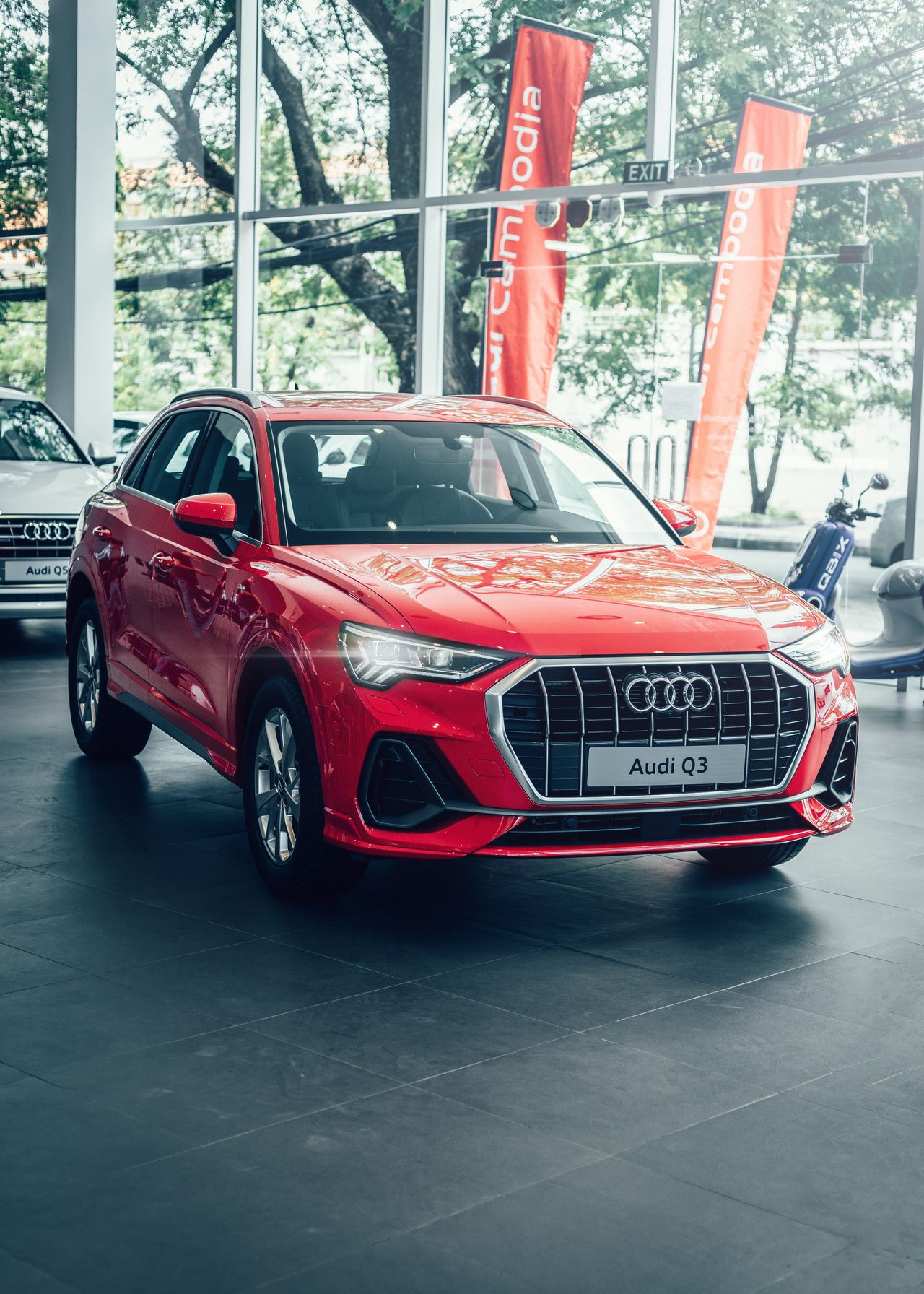
The Audi Q3 occupies the compact SUV segment with the benefit of Audi's premium brand positioning, VW Group engineering reliability, and interior quality that sits clearly above mainstream rivals like the Nissan Qashqai or Renault Captur. For Isle of Wight buyers who want the premium feel of a BMW X1 or Mercedes GLA without the maintenance bills, the Q3 often represents a better long-term proposition — better-equipped, similarly priced, and from a group whose parts and servicing network is well-established.
Which Generation to Buy
F3 Audi Q3 (2018–present): The current model. A substantial step forward from the first generation in every respect — larger (an extra 97mm in length), better interior, digital instruments, and significantly improved refinement. The boxy design is distinctive and more confidently styled. Available from around £15,000 used. The engine to target is the 35 TFSI or 40 TFSI petrol.
F5 Audi Q3 (first generation, 2011–2018): The original Q3. A smaller car and a more ordinary interior — decent for its time but clearly older now. Available from around £8,000 for later examples in decent condition. Worth considering as a budget premium choice.
For most buyers, the F3 is the correct generation — it's meaningfully better in every area.
Audi's Engine Naming Explained
Audi uses a power-band naming convention rather than engine displacement names:
| Audi Name | Engine | Power |
|---|---|---|
| 35 TFSI | 1.5T EVO petrol | 150bhp |
| 40 TFSI | 2.0T petrol | 200bhp |
| 45 TFSI | 2.0T petrol | 230bhp |
| 35 TDI | 2.0 diesel | 150bhp |
The 35 TFSI (1.5 EVO, 150bhp) is the most sensible choice for island buyers — efficient, refined, and the most widely available F3 Q3. The 40 TFSI (200bhp) offers more performance without dramatically higher running costs. Avoid the early 1.4 TFSI in first-generation cars — less refined than the 1.5 EVO.
Which Engine for IoW?
35 TFSI (1.5 EVO, 150bhp): The recommended petrol. The cylinder deactivation (COD) system helps economy at cruising speeds. Real-world fuel economy of 37–43mpg in mixed island driving. No DPF. The natural choice for island buyers.
40 TFSI (2.0T, 200bhp): More performance, better on faster roads including mainland dual carriageways. Economy is slightly lower at 34–40mpg but the refinement at speed is excellent.
35 TDI (2.0 diesel, 150bhp): The diesel option. Economy is excellent at 48–55mpg, but DPF risk applies on short island trips. Only worth choosing if you regularly ferry to the mainland and drive longer distances.
F3 Q3 vs VW T-Roc: Which Is Right?
| Audi Q3 (F3) | VW T-Roc | |
|---|---|---|
| Platform | MQB (same) | MQB (same) |
| Interior quality | More premium | Good |
| Standard equipment | Better specced | Adequate |
| Price used (comparable) | £3,000–£5,000 more | — |
| Driving feel | Slightly more cushioned | Slightly sharper |
| Brand premium | Higher | Lower |
| Running costs | Slightly higher (Audi parts) | Lower |
The Q3 and T-Roc share VW Group's MQB platform and most of the same mechanical components. The Q3 has a more premium interior and better standard equipment. The T-Roc is cheaper for comparable spec and mileage. For buyers who don't value the Audi badge, the T-Roc offers equivalent engineering for less money.
Known Issues to Check
DSG gearbox (S tronic): The 7-speed S tronic (Audi's name for DSG) can develop shudder at very low speeds on some cars. Test for smooth, progressive pull-away from standstill. Most issues are resolved by DSG fluid changes.
Infotainment (older MMI systems on F5): First-generation Q3s with the older MMI system feel dated. The F3's MIB2 or Virtual Cockpit systems are significantly better. Check for software updates if connectivity issues are noted.
Oil consumption (1.8 TFSI on F5): The 1.8 TFSI in first-generation Q3s can develop mild oil consumption above 80,000 miles. Check the dipstick at viewing and ask about top-up frequency.
Brake dust shields: A common minor issue — brake dust shield clips can corrode and rattle. Minor but worth mentioning at viewing.
IoW Buying Tips
Audi Q3 supply on the island is lower than mainstream rivals — typically a handful of examples at any time across both generations. Higher-specification models were often company or PCP purchases, so HPI finance checks are especially important.
Audi main dealer servicing is expensive. Independent Audi specialists bring costs to a reasonable level — comparable to VW independents. Parts cost more than mainstream brands. Insurance groups are higher than equivalent mainstream SUVs (groups 25–35 typically).
Check MOT history at gov.uk/check-mot-history and run an HPI check.
Budget Guide
| Budget | What to Expect |
|---|---|
| Under £10,000 | F5 (first gen), 2015–2017, 1.4 TFSI or 2.0 TDI, 50,000–90,000 miles |
| £10,000–£16,000 | F5 late or early F3, 2018–2019, various engines |
| £16,000–£22,000 | F3, 2019–2021, 35 or 40 TFSI, 20,000–50,000 miles |
| £22,000+ | F3 recent, 2021–2023, low mileage, Sport or S line |
Frequently Asked Questions
Is the Audi Q3 reliable?
Yes — the Q3 benefits from VW Group engineering, which is well-proven at this point. The F3 (2018+) with the 35 TFSI 1.5 EVO engine is reliable and straightforward. The first-generation F5 with the 1.8 TFSI can develop oil consumption above 80,000 miles. The S tronic gearbox is reliable when serviced correctly with DSG fluid changes at the recommended intervals. Overall, the Q3 has a solid record when properly maintained.
Is the Audi Q3 worth the premium over a VW T-Roc?
They share the same platform, engines, and much of their mechanical content. The Q3 has a more premium interior with better materials and standard equipment. The price premium is £3,000–£5,000 for comparable models. Whether it's worth it depends on how much you value the interior quality and brand. For buyers who use and appreciate the additional interior refinement, yes. For buyers who primarily care about driving and practicality, the T-Roc provides almost equivalent value for less money.
What is the best Audi Q3 to buy on the Isle of Wight?
The F3 (2018+) with the 35 TFSI 150bhp petrol in Sport or S line trim is the recommended choice. It avoids the diesel DPF concerns for island driving, has sufficient performance for IoW roads, and the digital instrument cluster and MMI system in this generation are genuinely pleasant to use. A 2019–2020 example with 30,000–50,000 miles is the sweet spot at around £17,000–£21,000.
How does the Audi Q3 compare to the BMW X1?
Both are premium compact SUVs with similar pricing and class positioning. The BMW X1 has more performance options and slightly better driving dynamics. The Audi Q3 (F3) has a more distinctive interior and often better standard equipment for the money. Servicing costs are similar. On the island, both are premium choices that will serve well — the decision often comes down to brand preference and which specific used example is available at the right price.
Is the Audi Q3 good for Isle of Wight roads?
Yes. The F3 Q3's ride quality is comfortable — better-suited to the island's varied road surfaces than some rivals. The compact dimensions (4.48m for the F3) make it manageable in island car parks and on narrower roads. The driving position is elevated for good visibility. Running costs from the 1.5 EVO are 37–43mpg in mixed island driving — reasonable for a premium SUV.
Browse Audi Q3s for sale on the Isle of Wight →
Related: Audi Q5 guide · Volkswagen T-Roc guide · HPI checks explained