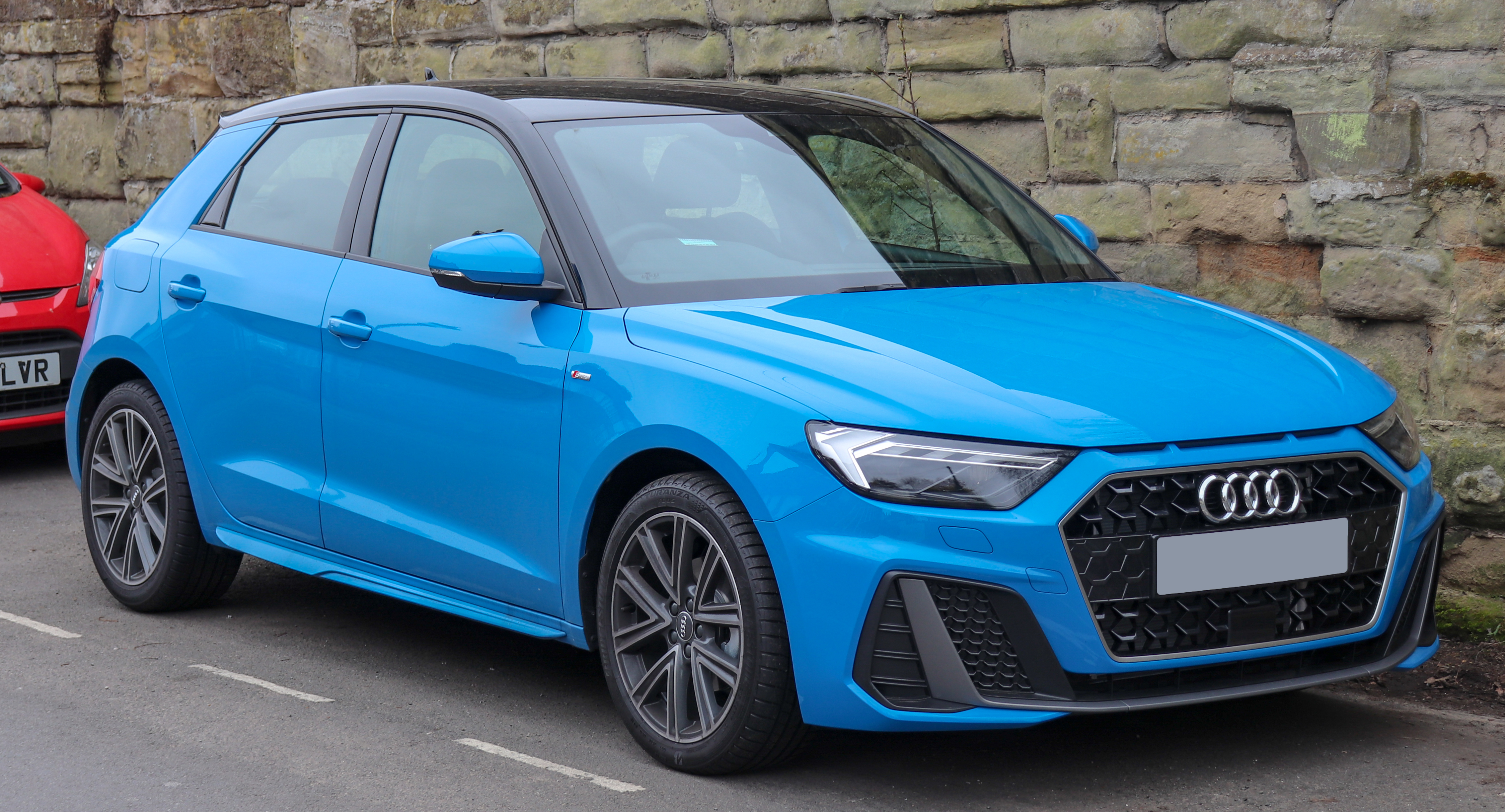
The Audi A1 occupies a unique position in the small car market: a premium hatchback that genuinely justifies its price premium over rivals. Where the VW Polo or SEAT Ibiza offer VW Group mechanicals in mainstream packaging, the A1 wraps similar underpinnings in a distinctly higher-quality interior, stronger build, and the Audi badge. For Isle of Wight buyers who want the smallest footprint possible without sacrificing interior quality or technology, the second-generation A1 (2018+, GB platform) is the model to target.
Which Generation to Buy
Second-generation A1 (2018–present, GB platform): The generation to buy. A substantially redesigned car that arrived on Audi's MQB A0 platform — the same base as the VW Polo. The interior took a significant step up with digital instruments, Audi's MMI infotainment system, and much higher-quality materials. Available from around £12,000 for early examples.
First-generation A1 (2010–2018, 8X platform): Now showing its age. A characterful-looking car but the interior quality, infotainment, and refinement lag behind the second generation. Only worth considering as a very budget premium small car.
The second generation (GB/2018+) is decisively better — for most buyers it's the only A1 worth considering.
Audi's Engine Naming in the A1
Audi uses a power-band naming system rather than displacement names in the second-generation A1:
| Audi Name | Engine | Power |
|---|---|---|
| 25 TFSI | 1.0T 3-cylinder | 95bhp |
| 30 TFSI | 1.0T 3-cylinder | 116bhp |
| 35 TFSI | 1.5T 4-cylinder | 150bhp |
Note: no diesel is offered in the second-generation A1. This is a positive for island buyers — no DPF concerns, no cold-start issues from short trips.
Which Engine for IoW?
30 TFSI (1.0T, 116bhp): The most commonly available second-gen A1 and the recommended choice for most island buyers. The 1.0-litre 3-cylinder is smooth, economical (42–50mpg real-world), and entirely adequate for island roads and occasional mainland ferry runs. The 3-cylinder engine has a distinctive character — slightly more vocal than a 4-cylinder but not intrusive.
35 TFSI (1.5T, 150bhp): The step up. A 4-cylinder turbocharged engine with meaningfully more performance. Better on faster roads and mainland dual carriageways. Economy is slightly lower at 38–45mpg but still strong. Worth seeking out for buyers who use the A1 for regular mainland driving or simply want better performance.
25 TFSI (1.0T, 95bhp): The entry-level engine. Fine for town use but noticeably less capable on hills or when carrying passengers. The island's gradient — Ventnor ridge, St Catherine's, Brading Down — is manageable but the 25 TFSI needs more engine work to maintain pace.
A1 vs VW Polo vs SEAT Ibiza
| Audi A1 (GB) | VW Polo (AW) | SEAT Ibiza (KJ) | |
|---|---|---|---|
| Platform | MQB A0 (same) | MQB A0 (same) | MQB A0 (same) |
| Interior quality | Premium | Good | Good |
| Standard equipment | Better specced | Adequate | Good value |
| Price used (comparable) | £3,000–£5,000 more | — | £500–£1,500 less than Polo |
| Boot space | 335 litres | 355 litres | 355 litres |
| Running costs | Higher (Audi parts) | Lower | Lower |
| Insurance groups | Higher (25–34) | Lower (10–20) | Lower (10–18) |
All three share the same MQB A0 platform and the same basic engines. The A1 has a genuinely better interior and standard equipment level. The Polo and Ibiza offer the same mechanical package for less money and lower insurance. For buyers who will appreciate the A1's interior daily, the premium is justified. For those who primarily care about function and running costs, the Polo delivers almost everything.
Known Issues to Check
Infotainment system (early examples): The MMI infotainment in early second-gen A1s can be slow to respond and occasionally freezes on older software versions. Check that the system boots quickly, responds to touch promptly, and that Android Auto/CarPlay connects reliably. Updates are available at Audi dealers or via Audi's online update tool.
3-cylinder refinement (30 TFSI): The 1.0T 3-cylinder is more vocal than a 4-cylinder at higher engine loads. At idle or light cruising it's smooth; under heavier acceleration it's more characterful. Test a full-throttle run at viewing — some buyers find the noise level surprising.
Spare wheel absence: Many second-gen A1s come with a tyre inflation kit rather than a spare wheel. Island driving doesn't have rapid recovery services readily available — consider purchasing an emergency spare if the A1 you buy doesn't include one.
Build quality consistency: The second-gen A1 is assembled in Spain (unlike most Audi models made in Germany) and occasionally shows minor panel gap inconsistency on very early examples. Check door gaps and panel alignment at viewing, particularly on 2018–2019 production cars.
IoW Buying Tips
The A1's compact footprint — 4.03m long, 1.74m wide — is one of the smallest of any modern hatchback and makes it ideal for island narrow lanes and tight car parks. The short overhangs and direct steering reward confidence on the island's twistier B-roads.
Insurance groups run from around 25 to 34 for the second-generation A1 — significantly higher than a comparable VW Polo or Ford Fiesta. Young drivers should compare insurance quotes before committing to an A1 over a mainstream alternative. See our car insurance guide for island insurance context.
Audi second-hand values hold up well — the A1 doesn't depreciate as fast as mainstream small cars, which means used prices are higher relative to age. An A1 genuinely worth buying will cost more than an equivalent Polo or Ibiza.
Check MOT history at gov.uk/check-mot-history and run an HPI check.
Budget Guide
| Budget | What to Expect |
|---|---|
| Under £13,000 | Gen 2, 2018–2019, 25 or 30 TFSI, 40,000–70,000 miles |
| £13,000–£17,000 | Gen 2, 2019–2021, 30 TFSI, 20,000–50,000 miles |
| £17,000–£21,000 | Gen 2, 2020–2022, 30 or 35 TFSI, lower mileage, S Line trim |
| £21,000+ | Gen 2 recent, 2022–2024, low mileage, full specification |
Frequently Asked Questions
Is the Audi A1 worth the money over a VW Polo?
They share the same MQB A0 platform and the same basic engines. The A1 has a genuinely better interior with higher-quality materials and more premium standard equipment. The price premium is £3,000–£5,000 for comparable models, plus higher insurance groups and slightly higher servicing costs. Whether it's worth it depends entirely on how much you value the interior quality and the Audi badge. Drivers who spend significant time in the car and appreciate the cabin will likely feel the premium is justified. Practical-first buyers will find the Polo delivers the same driving experience for less.
Does the Audi A1 have good reliability?
Yes — the second-generation A1's mechanical components come from the wider VW Group, which is well-proven. The 1.0T 3-cylinder engine (30 TFSI) and 1.5T 4-cylinder (35 TFSI) are reliable with proper servicing. The main concern for early examples is infotainment system responsiveness, which improves with software updates. No diesel is offered in the second-gen A1, removing DPF concerns entirely — a meaningful reliability advantage for island short-trip driving.
Is the Audi A1 good for IoW roads?
Very good. Its compact 4.03m length makes it one of the easiest cars to place on narrow island lanes and to park in tight spaces. The steering is direct and confidence-inspiring on twisty B-roads. The ride quality on the standard suspension is firm by small car standards — comfortable for most IoW roads, though the island's occasional potholed lanes may feel more pronounced than in a softer-suspended rival.
What insurance group is the Audi A1?
Second-generation A1 insurance groups range from around group 25 (30 TFSI, Sport trim) to group 34 (35 TFSI, S line). This is significantly higher than a VW Polo (groups 10–20) or Ford Fiesta (groups 8–18). Young drivers should check insurance quotes specifically before purchasing an A1 — the premium brand positioning means insurance costs are meaningfully higher than mainstream small car alternatives.
Is there a diesel Audi A1?
Not in the second-generation (2018+) A1. Audi discontinued diesel in the A1 for the second generation, offering only petrol engines (25, 30, and 35 TFSI). This is a genuine advantage for island buyers — no DPF to maintain on short IoW trips, no cold-start concerns from never reaching operating temperature. The 30 TFSI 116bhp petrol is efficient enough (42–50mpg) to serve as an everyday island car without diesel's running cost advantages being necessary.
Browse Audi A1s for sale on the Isle of Wight →
Related: Audi A3 guide · Volkswagen Polo guide · Car insurance guide