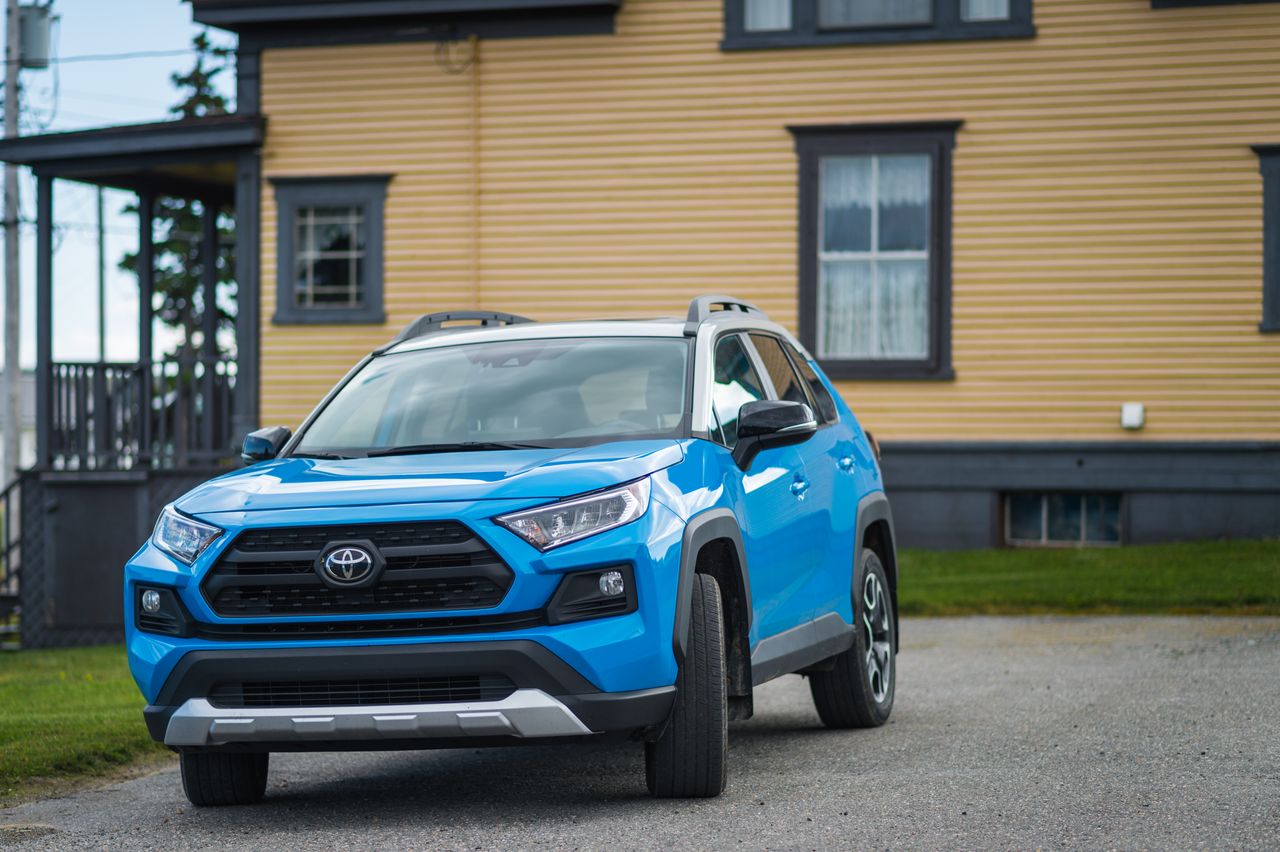
The Toyota RAV4 is one of the world's best-selling SUVs, and for good reason. It combines generous interior space, respectable off-road capability (on four-wheel-drive models), and — since the Mk5 generation — a class-leading hybrid powertrain. On the Isle of Wight, the hybrid RAV4 is one of the most logical car choices available: it's at its most efficient in exactly the kind of stop-start, under-30mph driving that makes up most island journeys.
Browse Toyota RAV4 listings on WightWheels →
Which Generation?
Mk3 (2005–2012): Solid, reliable, and relatively simple. Available in 2WD and 4WD. The 2.2 D-4D diesel and 2.0 petrol are the main engines. Now available cheaply but expect running costs — these aren't especially economical. Good choice if you genuinely need 4WD capability and have a modest budget.
Mk4 (2013–2018): A refinement of the Mk3 formula. More efficient engines (2.0 petrol or 2.2 diesel), improved infotainment, and the same Toyota reliability. Pre-hybrid, so efficiency is similar to comparable petrol/diesel alternatives from other brands.
Mk5 (2019–present): The game-changer. Toyota fitted the RAV4 with the same proven hybrid system used in the Yaris and C-HR, producing 218bhp from the combined petrol-electric powertrain with real-world fuel economy of 40–48mpg — much higher than comparable non-hybrid SUVs. Also available as a plug-in hybrid (PHEV) with 46 miles of electric range, which suits IoW daily use almost perfectly: most island journeys covered on battery, petrol available for longer runs.
Hybrid RAV4 on the Isle of Wight
The self-charging hybrid (no plugging in needed) is the sweet spot for most IoW buyers. On island roads:
- Stop-start driving: the electric motor handles low-speed movement — almost no fuel used in town
- Real-world 40–48mpg on mixed IoW driving
- No DPF issues (no diesel)
- Quiet around town — electric-first at low speeds
- Minimal maintenance: no timing belt to worry about, Toyota hybrid batteries have outstanding reliability records
The PHEV (plug-in hybrid) adds electric-only range for short island trips. If you have home charging, the PHEV runs on electricity for most island journeys and the petrol engine handles mainland road trips. Excellent for IoW lifestyle.
What to Check
Hybrid battery (all hybrid models): Toyota hybrid batteries are famously reliable but worth checking. A battery health check can be done by a Toyota dealer or specialist — most show negligible degradation even at 100,000+ miles.
Mk3/4 diesel — DPF: On a car used mainly for local island journeys, a diesel's DPF may not reach operating temperature for passive regeneration. Prioritise petrol or hybrid for IoW use over a diesel unless the car also covers regular long runs.
Corrosion on older examples: Check wheel arches and sills on Mk3 examples. The IoW's salt air can accelerate corrosion on cars from this era.
CVT gearbox (some Mk3 models): The CVT automatic was fitted to some Mk3 models and has a strong reputation. However, ensure the gearbox fluid has been changed per Toyota's schedule.
Budget Guide
| Budget | What to Expect |
|---|---|
| Under £6,000 | Mk3 (2008–2012), 2.0 petrol or 2.2 diesel |
| £6,000–£12,000 | Mk4 (2013–2018), 2.0 petrol |
| £12,000–£22,000 | Mk5 hybrid (2019–2022) |
| £22,000–£35,000 | Mk5 PHEV or near-new hybrid |
Frequently Asked Questions
Is the Toyota RAV4 hybrid good for the Isle of Wight? Outstanding — it's one of the most IoW-appropriate vehicles available. The self-charging hybrid system is at its most efficient in exactly the conditions the island presents: stop-start town driving, 30mph zones, and frequent gradients. Real-world 40–48mpg on mixed IoW routes is achievable without plugging in. No DPF, minimal servicing, and Toyota's legendary reliability make it a particularly sensible island purchase.
Which RAV4 version is best for island driving? The Mk5 self-charging hybrid (2019+) is the clear choice for most IoW buyers. The 218bhp petrol-electric powertrain is smooth, efficient, and well-suited to island speeds. The PHEV version (plug-in hybrid) adds up to 46 miles of electric range, which covers most IoW daily use on battery alone if you have home charging — an excellent choice for buyers with a wallbox. Older Mk3 and Mk4 petrol models are more affordable if budget is tight.
How reliable is the Toyota RAV4 hybrid battery? Extremely reliable. Toyota's nickel-metal hydride (and more recently lithium-ion) hybrid batteries have an outstanding real-world track record — many Mk3 and Mk4 hybrids have surpassed 150,000 miles without battery replacement. Toyota provides a battery health check at main dealers (usually free or low cost) that confirms remaining capacity. The hybrid battery warranty on most UK models extends to 100,000 miles or 8 years.
What should I check on a Toyota RAV4 from the Isle of Wight? On Mk3 examples (2005–2012), inspect wheel arches and sills for salt air corrosion — particularly on older island cars. For Mk3/Mk4 diesel models, ask about DPF history on a car used mainly for short island trips. On hybrid models, get a battery health check and check the CVT gearbox operates smoothly. Check tyre wear patterns — uneven wear can indicate suspension or alignment issues. Run a free MOT history check at gov.uk before viewing.
How much does a Toyota RAV4 cost on the Isle of Wight? A Mk3 (2008–2012) starts under £6,000 for a petrol or diesel in running condition. Mk4 (2013–2018) petrols cost £6,000–£12,000. The Mk5 hybrid (2019–2022) typically costs £12,000–£22,000 depending on mileage and spec. The PHEV version starts around £22,000 used. Island pricing broadly tracks mainland values — the RAV4's hybrid reputation means clean examples hold their value better than most equivalent SUVs.
Browse all SUVs and 4x4s for sale on the Isle of Wight →
Related: Kia Sportage IoW guide · Electric cars IoW · Toyota Yaris IoW guide