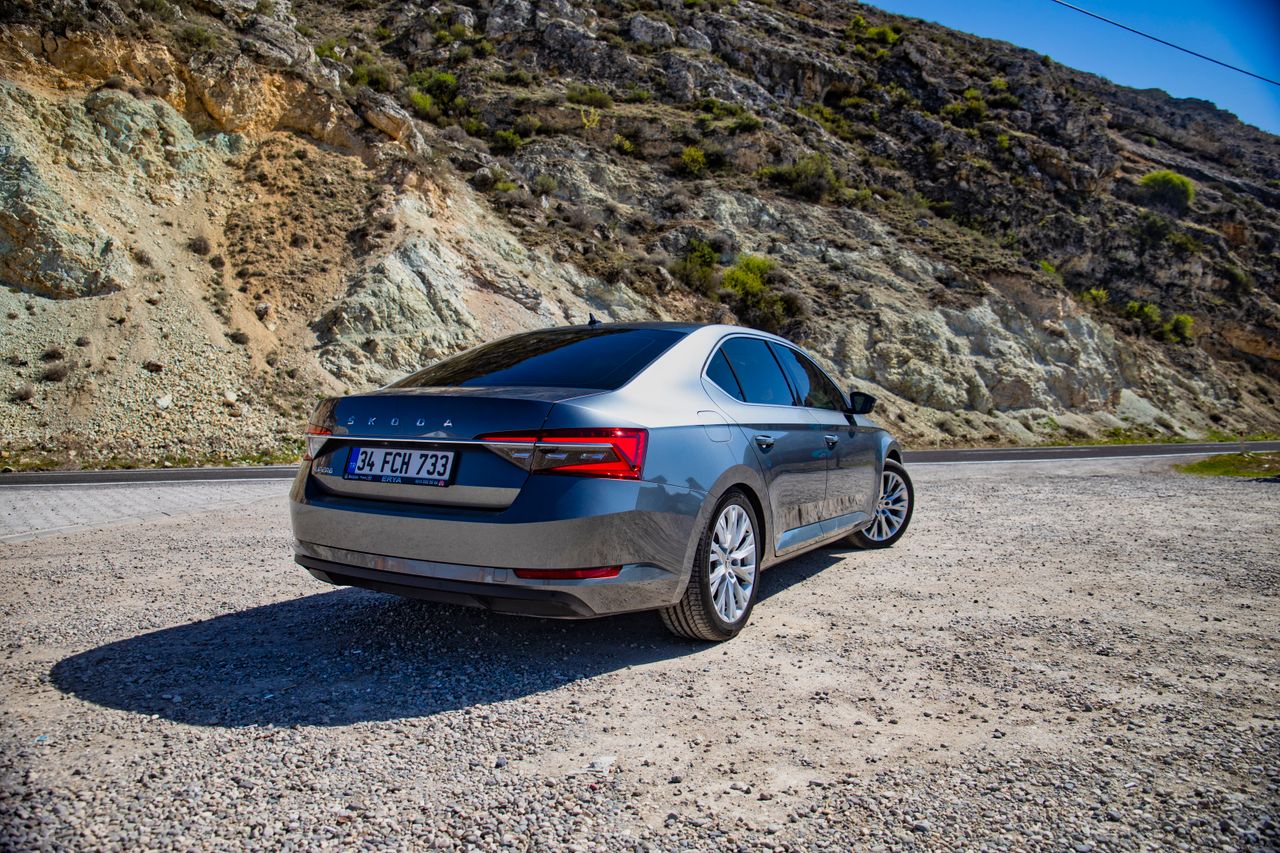
The Skoda Superb is one of the most undervalued large family cars in the used market. It shares VW Group's MQB platform with the Golf, Passat, and Octavia, uses the same engines and gearboxes — but because it carries a Skoda badge rather than VW or Audi, it sells for significantly less. The rear legroom of a limousine, a boot larger than most estates, and the build quality of the Volkswagen group at a Skoda price: for island buyers who need a large, capable family car without paying premium prices, the Superb is hard to argue against.
Which Generation to Buy
Mk3 Superb (2015–present): The generation to buy. The Mk3 is built on VW's modern MQB platform, has far superior interior quality to the Mk2, and is available with the excellent range of VW Group turbocharged engines. Available from around £9,000 for early examples with reasonable mileage.
Mk2 Superb (2008–2015): Now quite old and showing its age inside. The twin-door boot design (which opens either as a conventional boot or as a hatchback) is clever but the interior is clearly from another era. Only worth considering for buyers on very tight budgets who need the space.
For almost all buyers, the Mk3 is the right generation to choose.
Saloon or Estate?
Saloon: The twin-door boot (opens as conventional or hatchback) gives 625 litres of luggage space with a low loading lip. Rear legroom is extraordinary — 311mm between front seat back and rear cushion. This is more than many premium limousines.
Estate (Combi): 660 litres of boot, 1,950 litres with seats down. A practical choice for families with large luggage needs. Slightly rarer used than the saloon.
Both body styles are excellent for island life. The estate's extra boot space is valuable for ferry trips, beach equipment, and family loading, but the saloon's giant boot is already more than most buyers need.
Which Engine?
1.4 TSI (150bhp, petrol, Mk3 early): The entry petrol. Adequate for island driving and economy is reasonable (38–44mpg). Has active cylinder management on some variants.
1.5 TSI (150bhp, petrol, Mk3 post-2019): The updated petrol — smoother and more efficient. The engine to target in newer examples. Economy of 40–47mpg in mixed driving.
2.0 TSI (190–280bhp, petrol): The stronger petrols. The 190bhp is the sweet spot — enough performance for a large car, without the premium running costs of the 280bhp sportline version.
1.6 TDI (120bhp, diesel): The economy diesel. Fine for IoW use if you do some longer-distance driving. Economy of 50–55mpg real-world.
2.0 TDI (150–190bhp, diesel): The most popular engine combination. Excellent for mixed island/mainland driving. The 150bhp DSG combination is the most widely available used Superb. Check DSG fluid history.
Known Issues to Check
DSG gearbox: The seven-speed DSG fitted to many Superbs can show low-speed hesitation or judder, particularly on early examples. Check for smooth, progressive pull-away from standstill.
Oil consumption (2.0 TSI): Some 2.0 TSI petrol variants develop mild oil consumption on higher-mileage cars. Check the dipstick at viewing and ask if the owner tops up between services.
Suspension: The Mk3 Superb is softly sprung for comfort — admirably so on island roads. However, worn front suspension components (top mounts, lower ball joints) become more noticeable as cars age. Listen for clunks on full lock.
Corrosion: The Superb's corrosion protection is good, but island coastal exposure still warrants checking the lower door sills, wheel arches, and rear wheel arch liners.
Superb vs Skoda Octavia: Which Is Right?
| Skoda Superb Mk3 | Skoda Octavia Mk3 | |
|---|---|---|
| Boot (saloon) | 625 litres | 590 litres |
| Rear legroom | Exceptional | Good |
| Exterior length | 4.84m | 4.66m |
| Running costs | Similar | Similar |
| Price used (comparable) | £1,500–£3,000 more | — |
| IoW parkability | Needs more space | Easier |
The Superb makes sense if rear passenger space or boot volume is a priority. The Octavia is more manageable on the island's tighter car parks and rural lanes.
IoW Buying Tips
The Superb's 4.84m length warrants checking your usual parking spots — it's one of the longer cars in the family segment. It fits in standard UK parking bays, but tight spots in Newport's older car parks may require more care.
Supply on the island is reasonable for a large car — several examples are typically available at any time. The Superb has been popular with company car buyers, so many used examples have fleet history: regular servicing but higher mileage.
Check MOT history at gov.uk/check-mot-history and run an HPI check.
Budget Guide
| Budget | What to Expect |
|---|---|
| Under £10,000 | Mk3, 2015–2017, 1.6 TDI or 1.4 TSI, 60,000–100,000 miles |
| £10,000–£15,000 | Mk3, 2016–2018, 2.0 TDI DSG, 40,000–70,000 miles |
| £15,000–£20,000 | Mk3 facelift, 2019–2021, 1.5 TSI or 2.0 TDI, lower mileage |
| £20,000+ | Late Mk3, 2021–2023, low mileage, SE L or SportLine |
Frequently Asked Questions
Is the Skoda Superb reliable?
Yes — the Superb has a strong reliability record, particularly the Mk3 (2015–present) with post-2015 MQB-generation engines. The main things to check are DSG gearbox smoothness, oil consumption on 2.0 TSI petrols above 80,000 miles, and suspension component wear on higher-mileage examples. With documented service history, a well-maintained Superb is among the most dependable large family cars in its price bracket.
Is the Skoda Superb better than a VW Passat?
They share the same platform (VW MQB), the same engines, and essentially the same gearboxes. The Passat has a slightly more conventional interior design and stronger brand recognition. The Superb has more rear legroom, a larger boot, and typically sells for £2,000–£4,000 less for equivalent spec and mileage. For a used buyer, the Superb offers more car for money.
How big is the Skoda Superb boot?
The Mk3 saloon has 625 litres of boot space (or up to 1,760 litres with the rear seats folded, thanks to the hatchback-opening boot lid). The Combi estate has 660 litres to 1,950 litres. Both are among the largest boots in their class — larger than the equivalent VW Passat and significantly more than most hatchbacks or crossovers.
Is the Skoda Superb good for IoW family life?
Very good. The rear legroom is exceptional for passengers — children and adults sit comfortably on longer trips to the mainland or back. The boot swallows beach gear, family luggage for ferry trips, and weekly shopping with ease. The Superb's comfortable, absorbent ride quality suits the island's varied road surfaces well. At 4.84m it requires slightly more care in tighter spots, but the driving position gives good visibility.
Which Skoda Superb engine is best for island driving?
For island use, the 1.5 TSI 150bhp petrol (post-2019) is the recommended engine — efficient, smooth, and free of the DPF concerns of the diesel on short trips. If you do regular mainland runs via the ferry, the 2.0 TDI 150bhp DSG is the more economical choice and widely available used. Avoid the 1.6 TDI if you do a mix of short island journeys — the diesel at this power level benefits from regular higher-speed runs to keep the DPF clear.
Browse Skoda Superbs for sale on the Isle of Wight →
Related: Skoda Octavia guide · Volkswagen Passat guide · HPI checks explained