Electric vehicles are no longer a novelty on the Isle of Wight. As of 2026, the island's public charging network has grown substantially, with the Chargy scheme — delivered through Isle of Wight Council — adding charging points at car parks, town centres, and community locations across the island.
For anyone considering going electric, the IoW is now a genuinely viable EV environment — particularly for home charger owners.
The Chargy Rollout
Chargy is the IoW Council's public EV charging programme, delivered in partnership with charge point operators. The ambition has been to add hundreds of charge points at accessible public locations across all major towns and many rural areas.
What Chargy chargers offer:
- Typically 7kW AC slow/fast chargers (suited for parking while you shop or visit)
- Contactless payment — no app required at most units
- Located in council-managed car parks and layby areas
Locations with Chargy chargers (selected):
- Newport (multiple council car parks)
- Ryde (seafront car parks)
- Cowes (town centre car parks)
- Sandown and Shanklin
- Freshwater
- Yarmouth (near ferry terminal)
- Various rural car parks
For current charger locations and availability, the Chargy app and website show live status across the network.
Other Charge Point Operators on the Island
Chargy isn't the only network on the island:
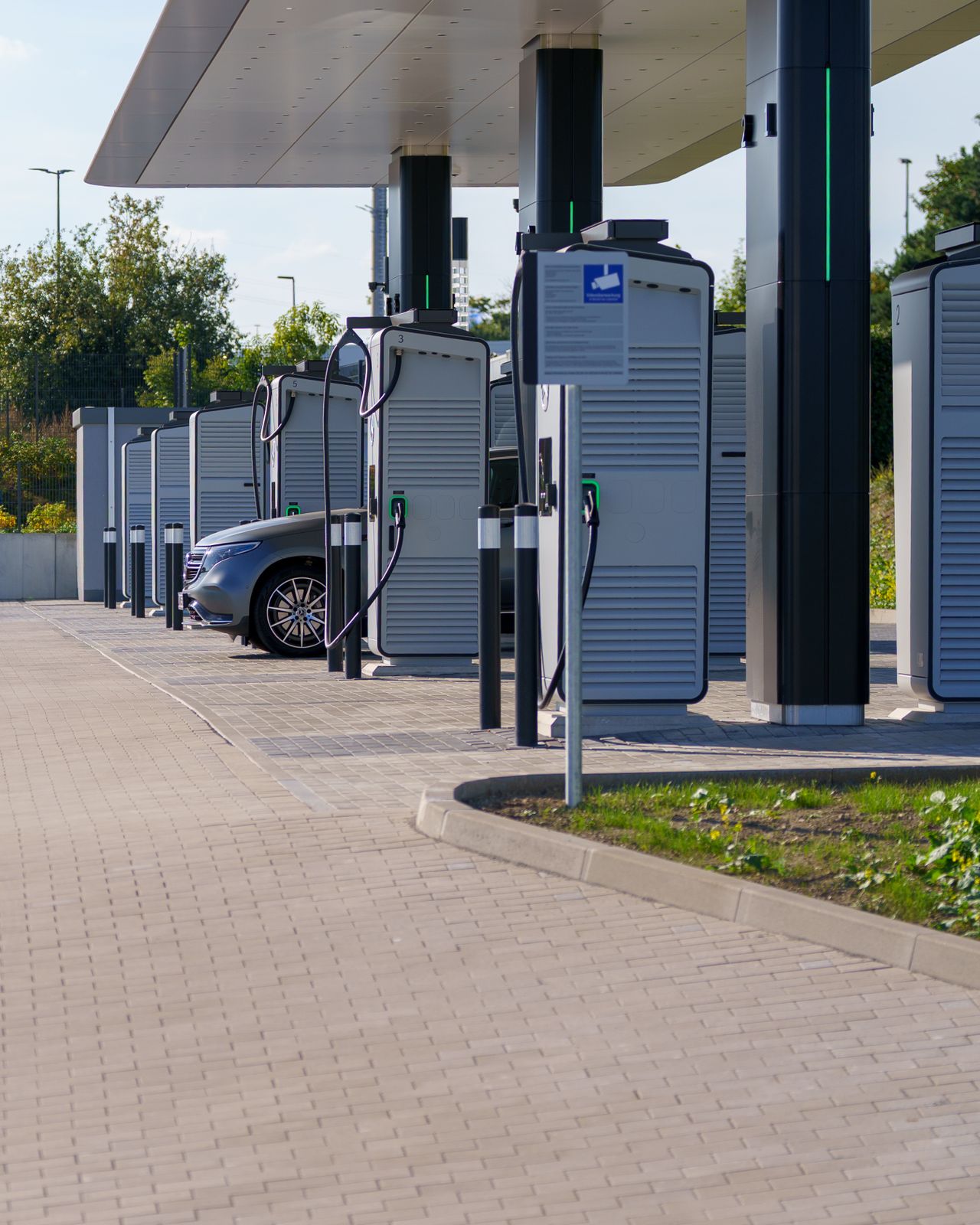
BP Pulse — Rapid chargers at BP forecourts. Look for these on the main A-roads near Newport. 50–150kW DC rapid chargers capable of adding 100 miles of range in 20–30 minutes.
Pod Point — Common at supermarkets and retail car parks. 7–22kW chargers.
Osprey Charging — Some IoW locations with rapid/ultra-rapid chargers.
Ohme — Home charger specialists who also operate some public units.
Planning Charging on an IoW Journey
The good news: you don't need to plan very hard. The island is 23 miles long and 13 miles wide. Even a modest 150-mile EV range covers the entire island network many times on a single charge.
Typical IoW journey ranges:
- Newport to Cowes: 5 miles
- Newport to Ryde: 8 miles
- Newport to Sandown: 10 miles
- Newport to Ventnor: 10 miles
- Newport to Freshwater: 12 miles
- Newport to The Needles: 20 miles
An EV with 200+ miles of range will handle virtually any IoW journey from a full overnight home charge. Public charging is mainly needed for:
- Drivers without home charging (flat or on-street parking)
- Top-ups before catching a ferry and then driving on the mainland
- Very high-mileage days (island tour, multiple trips)
Home Charging — The IoW Advantage
Most IoW properties are houses with off-road parking or garages — which makes home charging simple. A 7kW home charger (Ohme, Zappi, Pod Point Home) installed on your outside wall or in a garage is the most cost-effective way to charge.
Cost:
- Home charger unit + installation: typically £800–£1,200
- The OZEV Chargepoint Grant covered up to £350 of this cost for eligible buyers — check current availability at gov.uk
- Charging cost on a smart tariff (Octopus Go, EDF EV): 7–9p/kWh overnight — extremely cheap
Smart tariff example: Nissan Leaf 40kWh: £2.80–3.60 to charge from empty to full overnight. That's roughly 150 miles of range for under £4.
Ferry Considerations for EV Owners
Charging on the ferry: Do not plug your EV into any onboard socket on Wightlink or Red Funnel ferries. This is not a recognised charging service, may trip the vessel's electrics, and is not permitted.
Charge before you ferry: If you're planning a mainland trip, charge the night before so you have full range for the mainland journey. You'll be able to use Motorway rapid chargers (Gridserve, BP Pulse, Osprey) freely once on the mainland.
Range anxiety on the mainland: If your EV has less than 100 miles of range and you're catching the ferry from Fishbourne, you'll have plenty of charge for Portsmouth and beyond. Rapid chargers are available at Portsmouth Gunwharf Quays, the ferry terminal area, and along the M27 corridor.
Using Zap-Map
Zap-Map is the UK's most comprehensive EV charging map and works well for IoW. It shows:
- All publicly accessible charge points
- Current availability (live in many cases)
- Charger speed (slow/fast/rapid)
- Network operator
- User reviews and reliability notes
Before making any IoW EV journey to a location you haven't charged at before, check Zap-Map for the current status of chargers there.
Should You Go Electric on the Isle of Wight?
Yes, if:
- You have off-road parking or a garage for home charging
- You drive mainly around the island (virtually all journeys are short)
- You want lower fuel costs (home charging is dramatically cheaper than petrol)
- You're concerned about fuel availability (IoW petrol is expensive)
Worth thinking through, if:
- You frequently ferry to the mainland and drive long mainland journeys (check your EV range covers these comfortably)
- You live in a flat or terrace with no off-road parking (you'll be dependent on public charging, which is less convenient and more expensive)
Frequently Asked Questions
Is the Isle of Wight a good place to own an electric vehicle? Yes — arguably one of the best locations in England. The island is 23 miles long and 13 miles wide, meaning even a modest 150-mile EV range covers every possible journey many times over from a single home charge. Low average speeds and short trip distances maximise EV efficiency, which is the opposite of motorway-heavy driving that can reduce EV range. The main consideration is home charging: if you have off-road parking or a garage, a home wallbox makes island EV ownership simple and very cheap to run.
What is Chargy and where are the chargers? Chargy is the Isle of Wight Council's public EV charging programme, delivered in partnership with charge point operators. Chargy chargers are located in council-managed car parks across Newport, Ryde, Cowes, Sandown, Shanklin, Freshwater, and Yarmouth, with rural car parks also included. Most units are 7kW AC contactless chargers — suited for charging while you shop or visit. The Chargy app and website show live availability. Other networks on the island include BP Pulse (50–150kW rapid chargers on main A-roads), Pod Point at supermarkets, and Osprey Charging at selected locations.
Do you need a home charger to own an EV on the Isle of Wight? Not technically required, but strongly recommended. A 7kW home wallbox installed on your outside wall or in a garage makes overnight charging simple — a Nissan Leaf 40kWh charges from empty to full for roughly £2.80–£3.60 on an off-peak smart tariff like Octopus Go. Without home charging, you depend on public Chargy points, which are workable but less convenient and more expensive per kWh. Most IoW properties are houses with off-road parking, making home charging accessible to the majority of island residents.
Can you charge your EV on the ferry? No. Plugging into any socket on Wightlink or Red Funnel vessels is not a recognised EV charging service, may trip the vessel's electrics, and is not permitted by either operator. Charge overnight before any ferry crossing so you have full range for the mainland leg. Rapid chargers are available near Portsmouth ferry terminals, at Portsmouth Gunwharf Quays, and along the M27 corridor for longer mainland journeys.
What should I check when buying a used EV for Isle of Wight use? Battery health is the critical check. For a Nissan Leaf, use the Leaf Spy app via an OBD adapter to read State of Health — target 75% SoH minimum, ideally 80%+. For a Renault Zoe, a dealer diagnostic is the reliable method; also confirm whether the battery is owned outright or still on a rental lease (a critical distinction on older models). For a VW ID.3 or Vauxhall Mokka-e, a dealer battery health report is available. On any older EV, check that the 12V auxiliary battery has been replaced recently — it's separate from the traction battery and causes unexpected non-starts when neglected.
Browse electric vehicles on WightWheels →
Related: Mitsubishi Outlander PHEV guide · Running cost calculator · EV charger finder